
BMAT 2010 · Question 21 · Inference
SaveIn 2005, the total number of passengers at UK airports rose to 228 million, compared to 5 million in 1955. The numbers of passengers fell in the recession year of 1974, and in 1991, the year of the Gulf War, before continuing upward. There was also a marked flattening of the upward trend in 2001, the result of the Foot and Mouth outbreak and the September 11 attacks in New York. But these blips were temporary. The number of passenger kilometres flown by UK airlines increased significantly over the past twenty years, from 80 billion kilometres in 1985 to 287 billion in 2005. Around 97% of the 2005 total was accounted for by international travel. Nine in ten air passengers at UK airports in 2005 were travelling internationally. The country with which the UK exchanges the most air traffic is Spain. There were 34 million passenger movements between the two countries in 2005. Heathrow was the busiest airport in the UK, with 68 million passengers in 2005. Gatwick was the second busiest (33 million passengers). Demand for air travel is projected to continue growing well into the 21st century. Mid-range estimates from the Department for Transport suggest that the number of passengers at UK airports will grow to 500 million in 2030. Notes: Passengers on internal flights (domestic) are counted both at airport of departure and arrival.
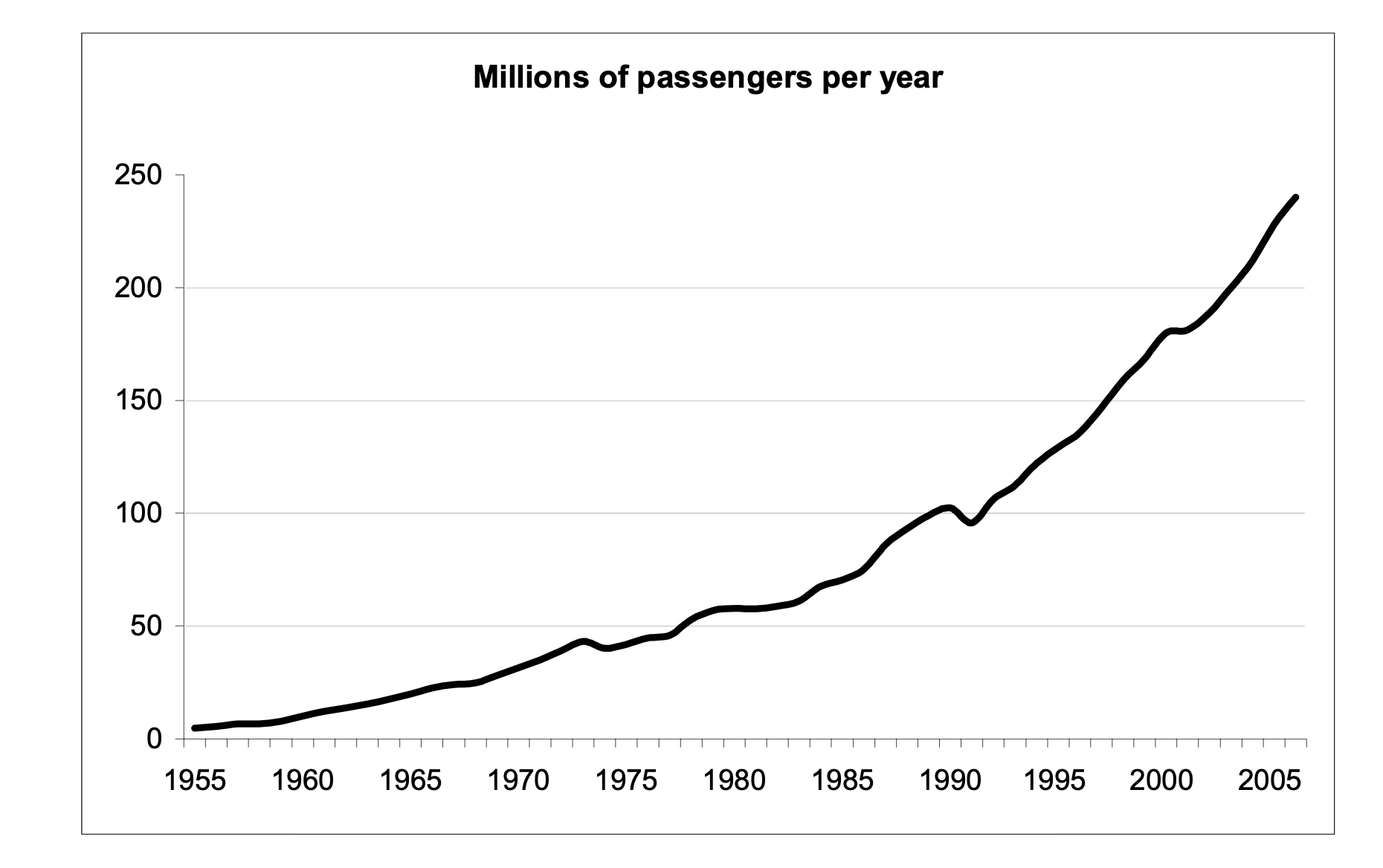
Which of the following can reliably be inferred from the graph and other available data? 1 Between 1980 and 2005 the average increase per annum in the number of passengers more than trebled compared with the previous 25 years. 2 Heathrow and Gatwick between them account for more than 4 out of every 10 passengers passing through UK terminals. 3 To achieve the Department of Transport prediction for 2030, the average increase in the number of passengers going through UK terminals will have to exceed 10 million per annum.