
BMAT 2011 · Question 11 · Supporting arguments
SaveThe difference between men's and women's pay is still at unacceptable levels, according to recent TUC research. It found that from the age of 18 - and throughout the rest of their working lives - women earn less than men. In their 20s, the pay gap for full-timers is a modest 3.3%, but in their 30s women take home 11.2% less than men. And in their 40s - the peak age for discrimination - the gap rises to 22.8% The TUC said the undervaluing of women in the workplace was partly due to a "motherhood penalty". The long hours and intensity of senior positions deterred mothers from seeking promotions for which they were qualified. The TUC said there was direct discrimination against mothers and their choice became limited to jobs that could be combined with looking after children. The "motherhood penalty" became even more severe for women who switched to part-time work. They were more likely to change employer or occupation, often taking jobs with lower hourly earnings. The hourly earnings of women working part-time were 23.4% less than the equivalent male rate in their 30s, and 41.2% in their 40s.
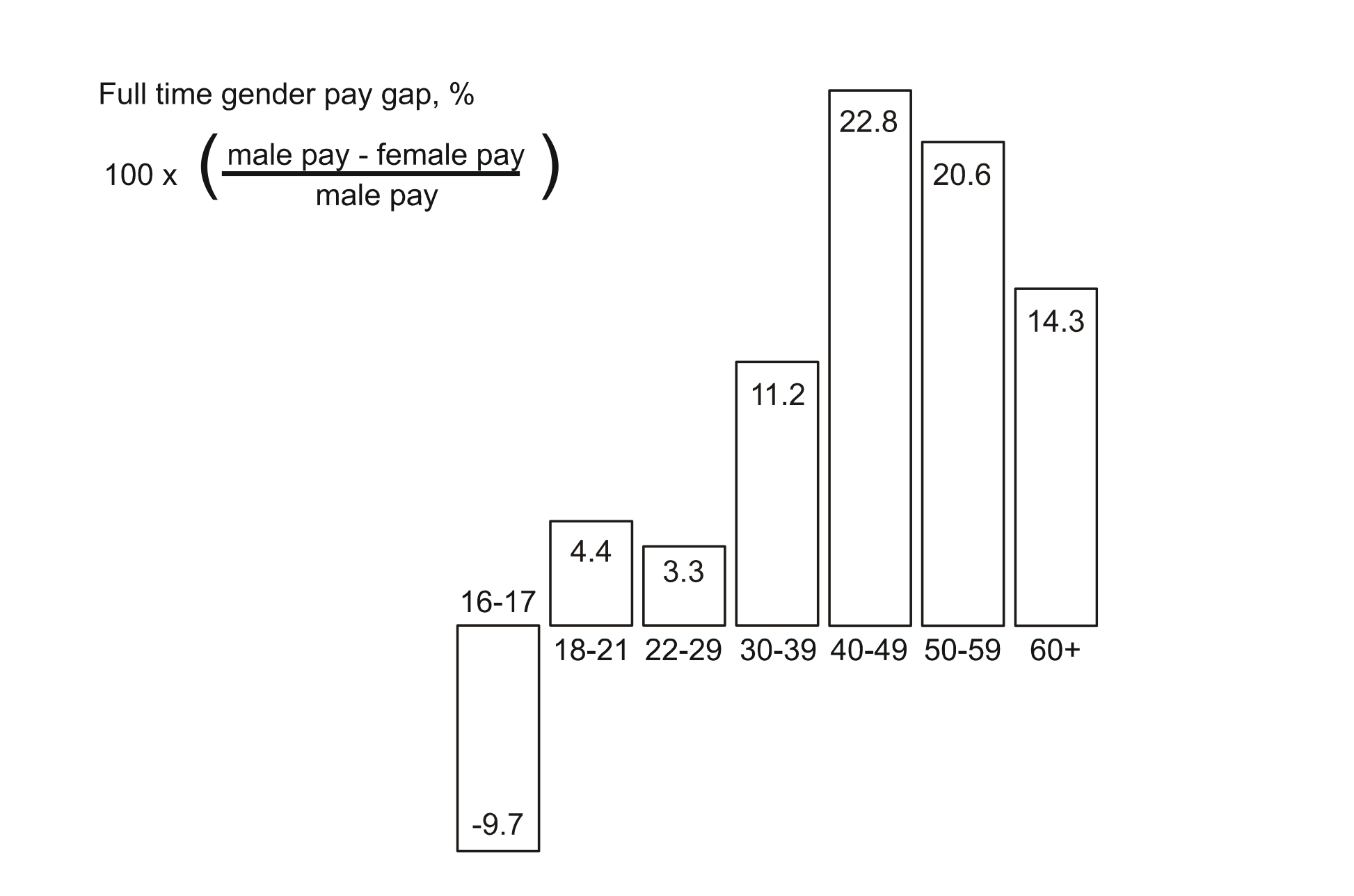
Assuming that the figures in paragraph 4 for part-time pay are correct, and that they follow the same general trend as the full-time pay gap, which one of the following is most strongly supported by the data provided?