
BMAT 2015 · Question 10 · Explanations
SaveAccording to figures published recently, 44% of criminals leaving prison will reoffend within one year of being released. So if the aim of prison (custodial) sentences is to stop people committing crimes, it really is not working. Short sentences are even worse, with 55% of offenders on short sentences reoffending within a year of leaving prison. And putting kids in prison is least effective of all – 70% of under-18s who receive prison sentences reoffend within 12 months. From a cold look at the statistics, prison does not look like a successful way to reduce crime, especially for young offenders on short-term sentences. So what are the alternatives? Whilst it is an option only for less serious categories of offence, giving offenders community service orders has been shown to reduce reoffending rates by 6%. This may be seen as a softer option by offenders and by the public, but when people are up in the dock convicted of an indictable offence, they are less likely to end up back in trouble if the judge gives them a community service order rather than a prison sentence. Another option that works even better is simply not sending someone to prison and giving them a suspended sentence instead. The figures show that people who get a suspended sentence are 9% less likely to reoffend than someone who committed a similar crime but was then sent to prison. But the most effective way of reducing reoffending is getting offenders to meet their victims. Campaigners for restorative justice programmes, where offenders engage with the impact of their crime and often meet their victims, say it can reduce reoffending by up to 27%. However, a government analysis puts the improvement at a more conservative 14%. The following studies contain relevant data, adapted from the November 2010 report from the Ministry of Justice, on which the above article was based:
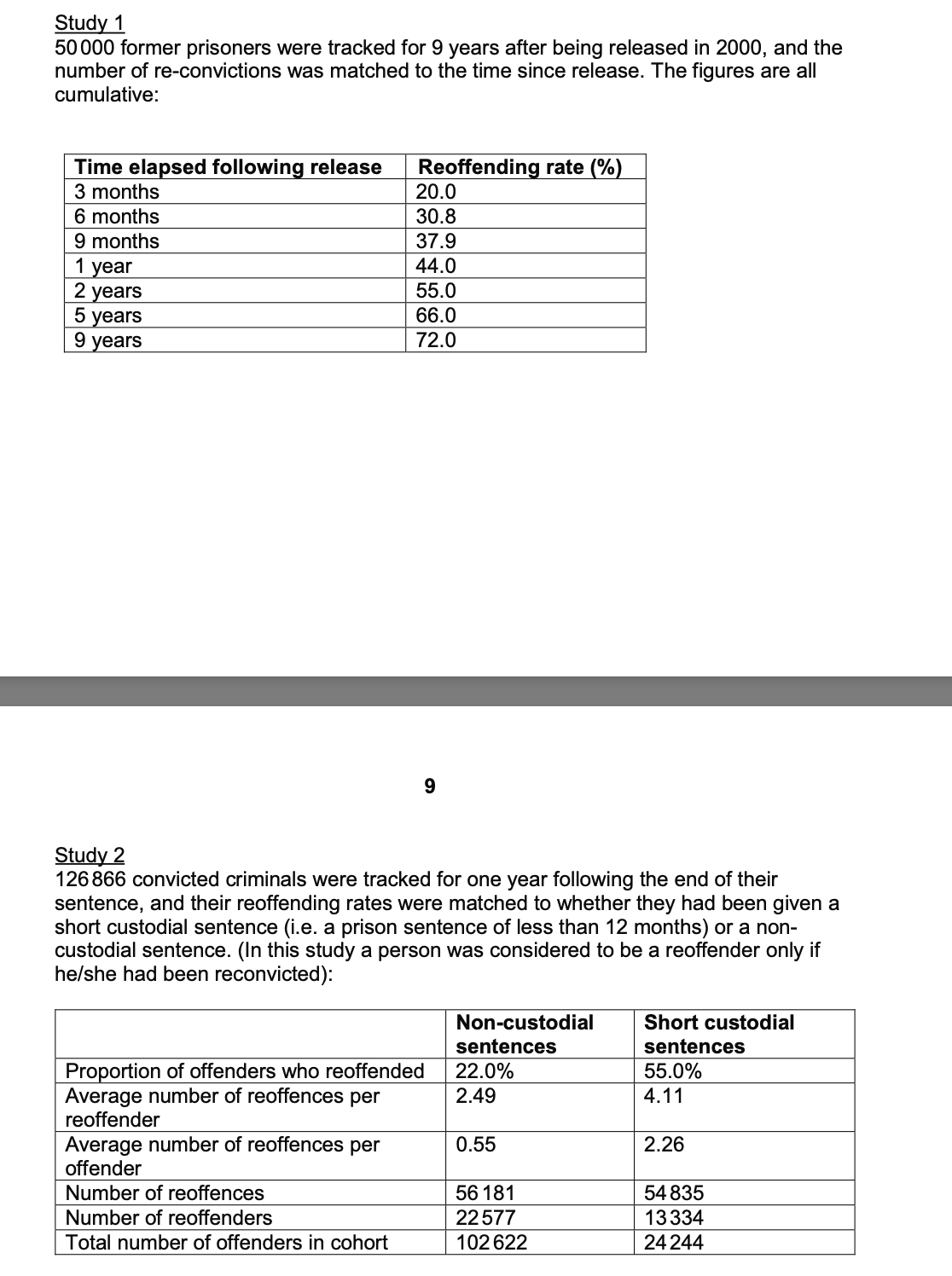
Study 2 shows that 55% of offenders released from a short prison sentence reoffended within a year, whilst only 22% of offenders did so having served a non-custodial sentence. Yet the passage claims that giving offenders a community service order instead of a prison sentence “reduces reoffending rates by 6%”. Which one of the following is the best explanation for the apparent discrepancy between these figures?