
BMAT 2017 · Question 11 · Logic
SaveThe following set of data is from a nine-year study of reoffending and reconviction rates in the UK. The study followed a cohort of 42,721 offenders who were released from prison in 2000 or given a non-custodial sentence in 2000. All figures are cumulative and relate only to offences that resulted in a conviction. No adjustment was made for factors that might account for a decline in the rate of reconvictions over time. Additional data was collected on offenders who had served custodial sentences and who were released from prison in 2000. Offenders who received longer sentences (four years and over) formed 2.3 per cent of the cohort. Offenders who received shorter sentences (less than twelve months) formed 24.2 per cent of the cohort, but committed 39 per cent of all offences that led to a conviction in the first year of the follow-up.
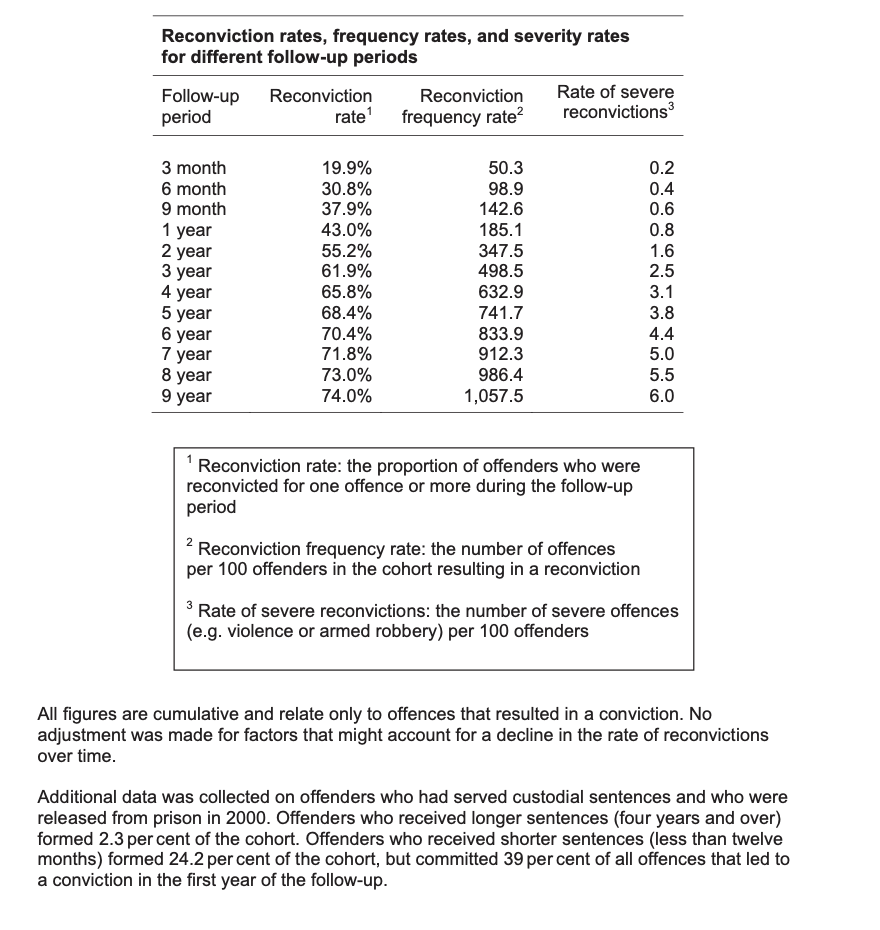
Which of the following factors might feasibly account for a decline in the year-on-year rate of reconvictions as indicated by the study? 1 substantial numbers of re-offenders being sent to prison 2 normal mortality rate over a decade 3 a deterrent effect created by harsher sentencing