
BMAT 2019 · Question 34 · Ratio/Proportion/Percentage
SaveNot drinking in middle age increases the risk of dementia as much as drinking too much, according to a new report. Published in the British Medical Journal, the data showed that abstinence (drinking no alcohol) in midlife was associated with a 45% higher risk of dementia compared with people who consumed between 1 and 14 units of alcohol per week. The risk of dementia increased steadily for higher rates of consumption. However, the report’s authors concluded that the underlying mechanisms leading to dementia for heavy drinkers and those abstaining were probably different. The study did not take into account the subjects’ drinking habits before middle age. The study tracked the drinking habits of more than 10 000 London civil servants between the ages of 35 and 55 from 1985 to 1993. They were then monitored for, on average, another 23 years. Of 10 308 baseline participants, a total of 397 cases of dementia were recorded over a mean follow-up period of 23.2 years. The findings of the study are summarised in the graph below, which shows how the likelihood of developing dementia later in life depended on the weekly rate of consumption of alcohol (X) during the eight-year period between 1985 and 1993. The ‘hazard ratio’ calculates this risk as the following ratio: proportion of participants that consumed X units per week in midlife who went on to develop dementia proportion of participants that consumed 14 units per week in midlife who went on to develop dementia The reference point of 14 units per week represents the government’s recommended maximum guideline for weekly consumption (equivalent to 7 glasses of wine or 7 pints of beer on average). The graph shows that abstinence was associated with a higher risk of dementia when the reference point was alcohol consumption of 14 units per week. Consumption of more than 14 units per week was also associated with an increased risk of dementia. The head of research at Alzheimer’s Research UK, said: ‘As this study only looked at people’s drinking in midlife, we don’t know about their drinking habits earlier in adulthood, and it is possible that this may contribute to their later life dementia risk. People who completely abstain from alcohol may have an earlier history of heavy drinking and this can make it difficult to interpret the links between drinking and health. Future research will need to examine drinking habits across a whole lifetime, and this will help to shed more light on the relationship between alcohol and dementia.’
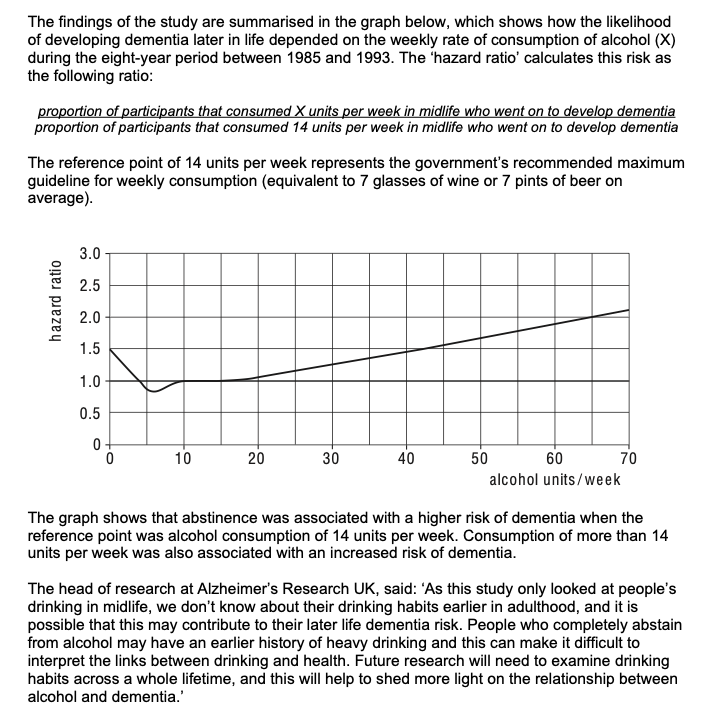
Approximately 40% of the study cohort consumed alcohol at the recommended rate of 14 units per week during the period 1985 to 1993. Of these, 80 went on to develop dementia in later life. Based on this information and the findings of the study, what proportion of adults who drink the equivalent of 3 glasses of wine per day in mid-life are likely to develop dementia in later life?