
BMAT 2019 · Question 9 · Logic
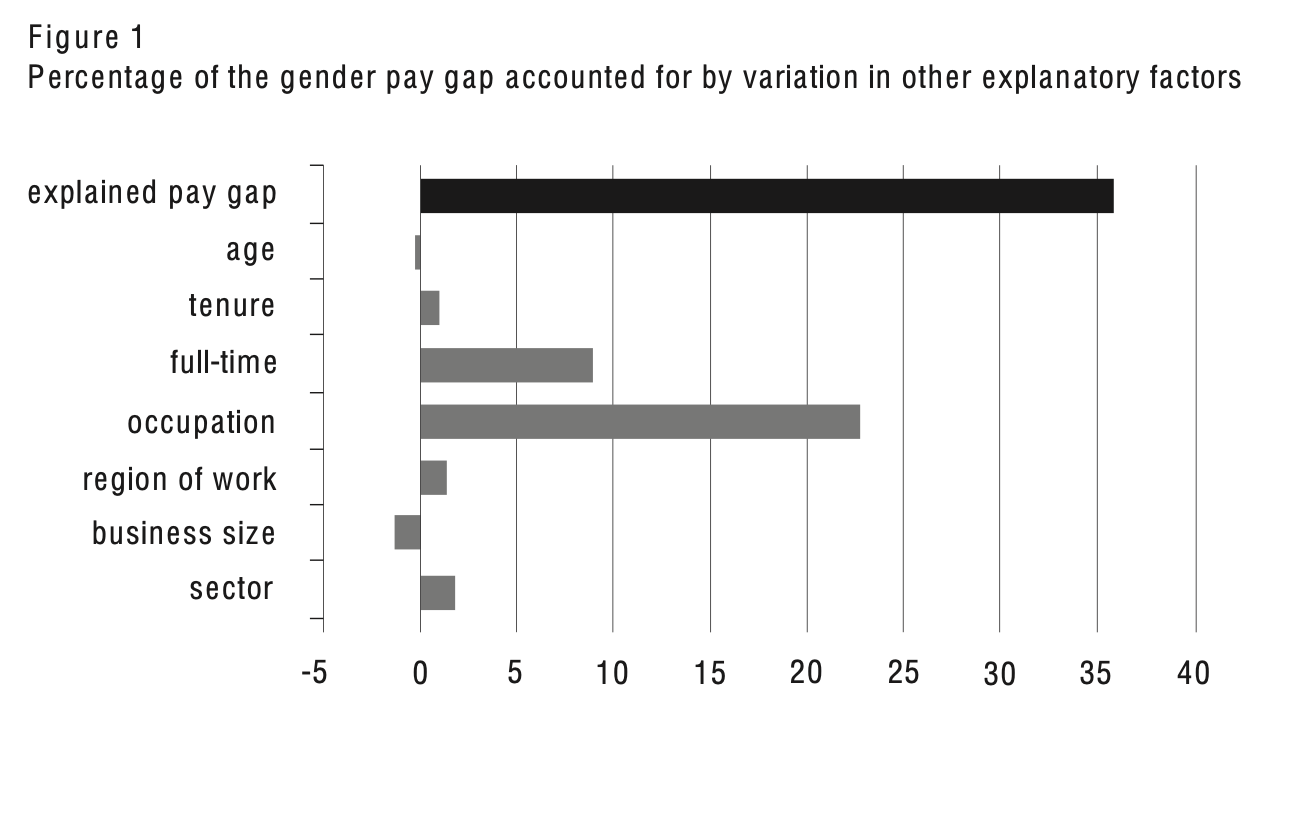
SaveThe gender pay gap is calculated as the difference between the average hourly earnings of men and the average hourly earnings of women, expressed as a proportion of the average hourly earnings of men. In 2017, average weekly earnings for full-time employees in the UK were £550, up 2.2% from £539 in 2016. Men were paid more than women on average: for full- time employees, the gender pay gap was 9.1%, down from 9.4% in 2016. This is the lowest since the survey began in 1997, when the gap was 17.4%, although it has changed relatively little in recent years. A recent study used statistical analysis to calculate the percentage of the gender pay gap (for all employees) that can be explained by factors such as common differences between the kinds of job that men and women do. It found that a proportion of the gap is due to the fact that more men are in senior roles in companies, which means they are in jobs which have a higher salary attached to them, and also because relatively more women work part time, which is paid less per hour. But when the analysts adjusted for these factors they found that they could only account for 36% of the average hourly pay gap. The rest (64%) was still unexplained, raising the possibility that discriminatory behaviour by employers might be partly responsible. The analysts said that this did not mean that two thirds of the gap must be attributable to pay discrimination by employers, because women’s relative academic qualifications and domestic caring responsibilities are also likely to be factors that they did not capture in their modelling exercise. But they did say that pay discrimination might be part of the explanation for the unexplained gap. Figure 1 outlines how the factors that were investigated contributed to the explained part of the gap.
Assume that the numbers of women and men working full-time are the same. What were the approximate average weekly earnings of women in full-time employment in 2017?